


Digital nomad life doesn’t start with booking a flight. It starts with planning, a spreadsheet, a conversation with your employer, and a realistic look at how to make it all work for how you live, work and seek adventure.
For Jules, one half of the creator couple Tom and Jules AKA Captain’s Log Travel, the move to a digital nomad style of life wasn’t about escaping work. It was about proving that a traditional career could survive, and even thrive, without being tied to one place.
“We both have corporate jobs,” Jules says. “We didn’t quit. We didn’t step away from our careers. We moved abroad and maintained our roles.”
Based between Canada and the United States, the couple relocated to Portugal for six months while continuing to work East Coast hours, often logging on in the afternoon and working late into the night. Between trips across Europe, they built a routine that allowed them to perform at work while moving frequently.
This is a look at how digital nomad life actually works when you keep your job, your standards, and your responsibilities — and what it really takes to make it sustainable.
What “Digital Nomad” Really Means
For Jules, digital nomadism is simple.
“It’s about still working hard and growing in your career,” Jules explains. “Just not being tied to one location.”
This distinction matters. Tom and Jules never planned to step back professionally.
“You don’t have to quit and go barefoot on the beach,” Jules says. “You can maintain a job and still explore.”
Your Job Has to Support the Life
Designing your role, job and career to adapt to your life goals can be a key factor.
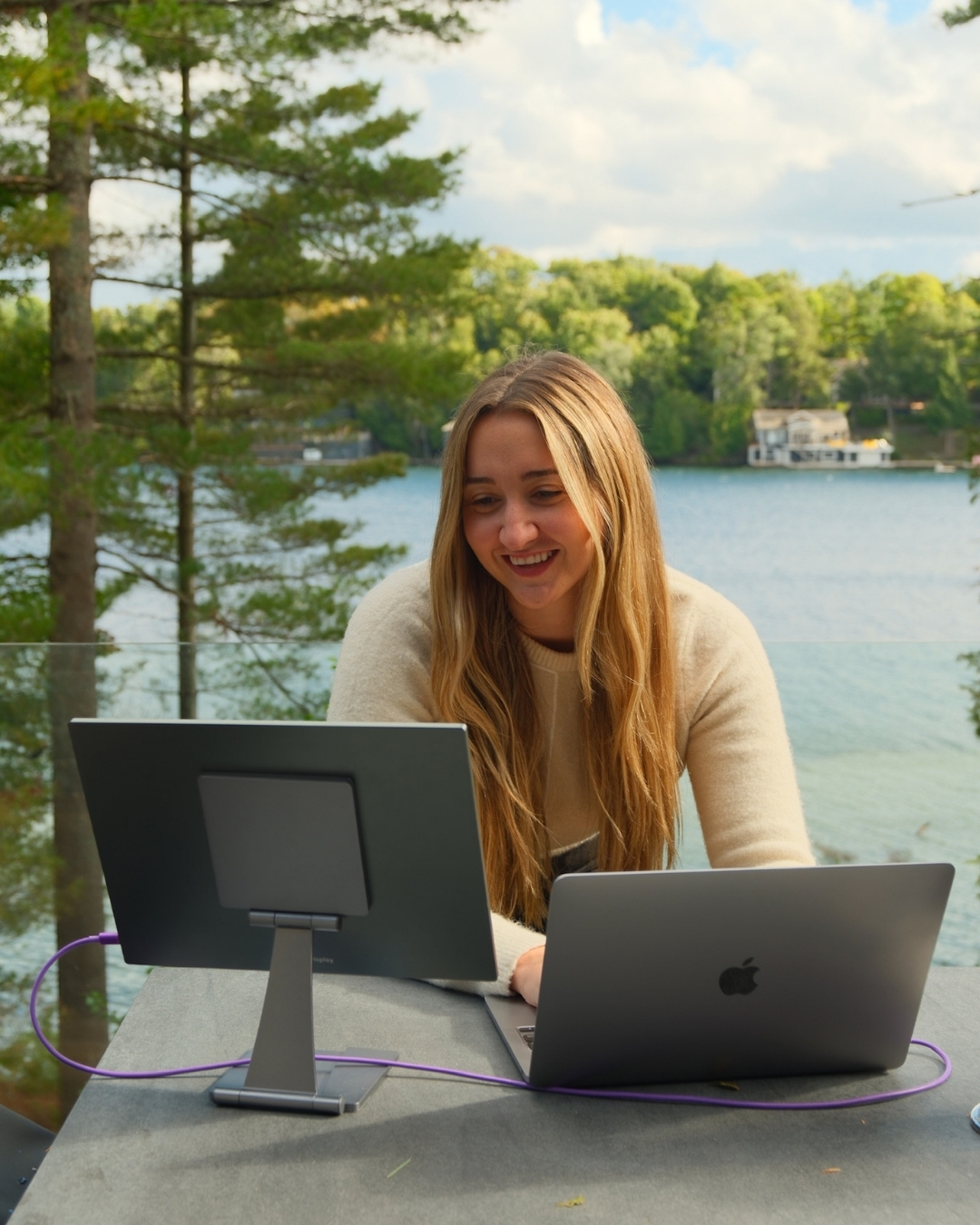
“The work has to make sense for the lifestyle,” Jules says. “If it’s in-person five days a week, you’re not just going somewhere with a laptop (and portable monitor).”
Both Jules and Tom were in roles that were already remote-capable, working with companies that valued flexibility and outcomes over location. That alignment made it possible to structure their work in a way that supported travel without disrupting their responsibilities
For anyone considering this from a daily commute, the first move is structural.
“Find work that supports it. Freelancing, contract work, or a remote-first company.”
Planning Is the Real Entry Point
The process was not sudden, but a considered and deliberate plan that took shape over time.
“It took us about a year,” Jules says. “From first steps to boarding the plane.”
That year included investigating appropriate visas, legal consultations, and location research.
“There was a lot of paperwork involved,” she says.
When deciding on the perfect place to base themselves, one practical conversation changed their path.
“We were considering Spain,” Jules recalls. “Then a lawyer said, ‘Have you considered Portugal?’”
Portugal offered clearer visa pathways, fewer barriers for remote workers, and a more straightforward process for staying longer than a typical tourist visa would allow.
“It was actually a lot more accessible through their visa programme,” Jules says.
From there, the decision made sense quickly. Lisbon offered reliable infrastructure, strong internet, and a time zone that made maintaining East Coast US work hours manageable, albeit the timezones are always a challenge.
Just as importantly, Portugal offered a stable base while still allowing easy movement across Europe.
The takeaway is simple: location choice wasn’t about aesthetics. It was about legality, logistics, and whether the country supported the reality of working full-time while living abroad.
Work, Location, and Workspace
For Tom and Jules, a “good location” is where work can happen reliably, day after day, without creating stress you can’t afford when you’re far from home. You need to have the ability to create a space that quickly becomes your new office
The decision framework can be broken down here:
- Reliability beats beauty:
If you can consistently join calls, upload files, and work at normal speed, everything else becomes easier.
“One thing for us is if we had strong enough Wi-Fi… we could show up to work and it’d be pretty seamless,” Jules says. “You’re not dropping on calls, you can upload things at a normal speed.”
- You need a real working environment, not just any apartment will do.
Digital nomad life includes imperfect days, but you don’t want them to be the default.
“We used to pour a lot of research into where we were staying,” Jules says, “making sure you have fast enough Wi-Fi, making sure you have enough space to set up in an appropriate way.”
And when that doesn’t happen:
“Was I working at a random hotel side table taking calls? Absolutely,” she says. “Was that my preferred spot? Absolutely not.”
- Your schedule has to match the time zone.
They made Europe work while staying on East Coast hours, but it shaped everything: when they explored, when they rested, and when they worked.
“We were maintaining our East Coast work hours,” Jules explains. “We were actually working in the afternoon evenings… not finishing work until midnight or 1:00 in the morning.”
- Pick a setup you can repeat.
The goal isn’t one perfect day. It’s a repeatable pattern: work, recovery, and enough margin to handle disruptions without burning out.
That’s the trade-off: you can choose almost any destination. But you can’t choose a destination that breaks your ability to perform.
Burnout Can Happen. Avoid the FOMO trap
Movement creates energy and can inspire us in so many ways. It can also create stress and challenge our senses. We’re out of familiar territory, we’re trying to keep up while experiencing as much as possible… but there is a caveat.
The trap is subtle. When you’re in a new place, it feels wasteful not to use every available hour. The instinct is to explore more, work later, sleep less, and repeat.
“There were periods of burnout,” Jules says. “And that can be overwhelming.”
“I wanted to see and do everything.” Thinking back, her advice would be, “Slow down. You can always go back.”
In practice, slowing down doesn’t mean doing less overall. It means choosing fewer places, staying longer, building rest into the schedule, and accepting that productivity and recovery are not separate from travel, they’re part of it.
Make It Feel Like Normal Life
“We recreated routines we’d have at home,” Jules says.
That meant deliberately resisting the urge to treat every day like a trip. Coffee at home instead of another café. Evenings on the couch instead of chasing plans. Simple meals rather than eating out constantly.
“You don’t need to be out all the time,” Jules says.
Those choices weren’t about saving money or missing out. They were about conserving energy and creating predictability in an otherwise unstable environment.
Time zones reinforced that discipline. While based in Europe, Tom and Jules maintained East Coast US work hours.
“We worked afternoons and evenings,” Jules explains. “Dinner was our lunch break.”
That structure dictated how they moved through the day. Mornings became personal time. Evenings were for work. Rest had to be intentional.
The point wasn’t to recreate home exactly. It was to give the brain enough familiarity to handle everything else that was new.
Travel didn’t replace normal life. It had to sit alongside it for the lifestyle to last.
Workspace, devices, and a portable monitor
For Jules, maintaining a workable setup on the move came down to reducing friction in her day-to-day work.
As a creative professional, she relies on being able to manage multiple tools and windows at once. “I’m addicted to my second screen,” she says. “I need multiple screens and windows. I’m very chaotic in my workflow.”
After experimenting with different portable setups that didn’t hold up to frequent travel, she settled into a configuration she could rely on.
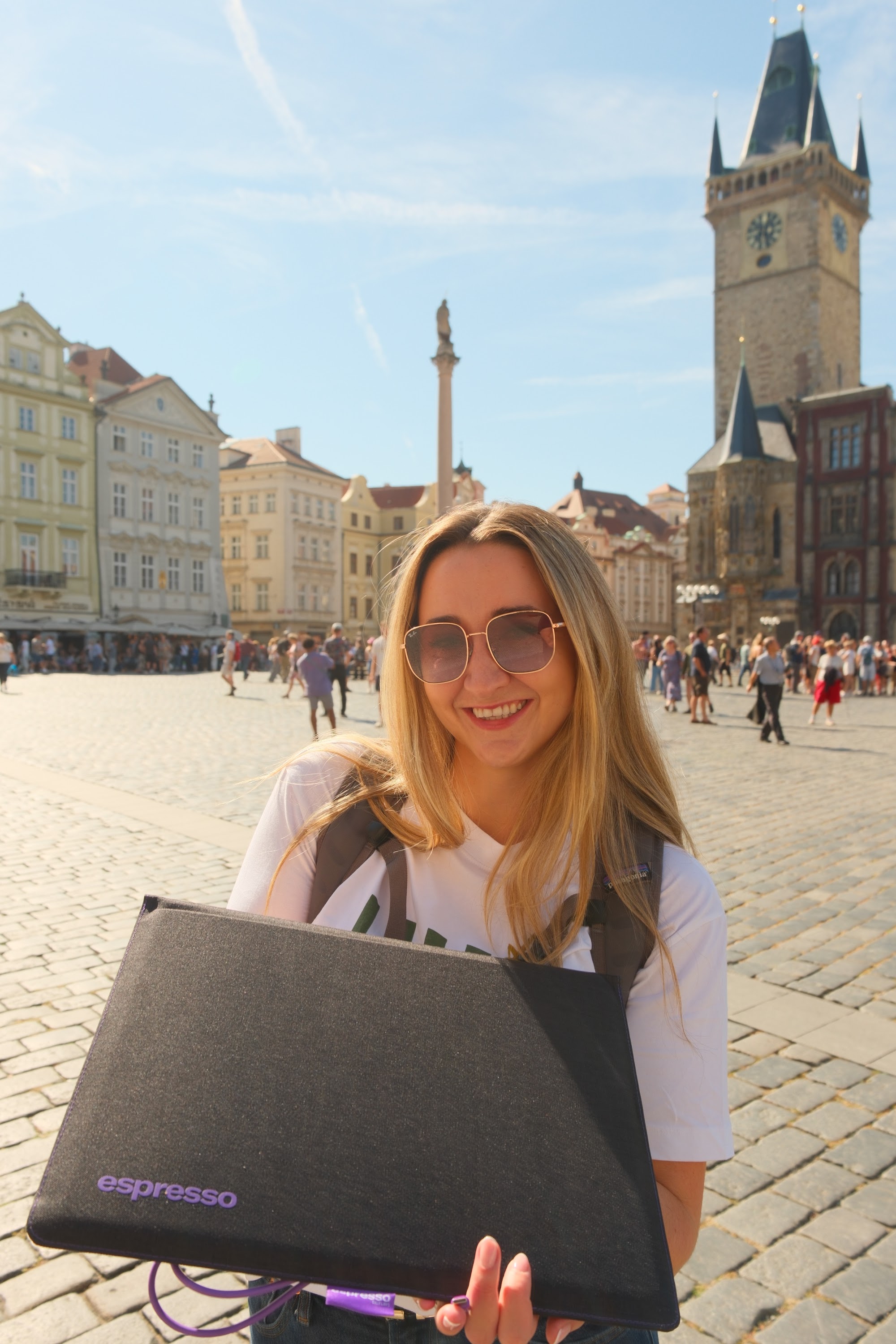
“We had experimented with travel monitors in the past… and they just were not working for us,” Jules explains. “Now my espresso display is my primary monitor because it’s just that much easier to bring around with me wherever I am.”
For her design work, consistency across locations mattered. “I need a really strong monitor that I can actually see colours on,” she says. “The espresso is the only one that I’ve found that’s been able to keep up.”
What This Life Actually Is Like on the Road
Digital nomad life isn’t purely freedom without friction. It introduces new constraints while removing others.
It replaces geographic stability with planning, structure, and trade-offs. Time zones, accommodation quality, energy management, and legal considerations all become part of daily life.
But, it creates once in a lifetime moments, memories and experiences.
“It absolutely is possible,” Jules says.
.ai.png)
.jpg)
.png)


