


For many people, the idea of working from anywhere away from home for extended periods sits between ambition and inspiration. Most people have experienced a few days added to a work trip, a few weeks somewhere warmer, or have researched digital nomad locations or lifestyles.
We got to speak with an espresso Displays customer who is living the professional travel life and is an active participant in both digital nomad communities, as well as the local areas where they work from. Beyond regular business travel, the digital nomad life is varied and more nuanced than ever.
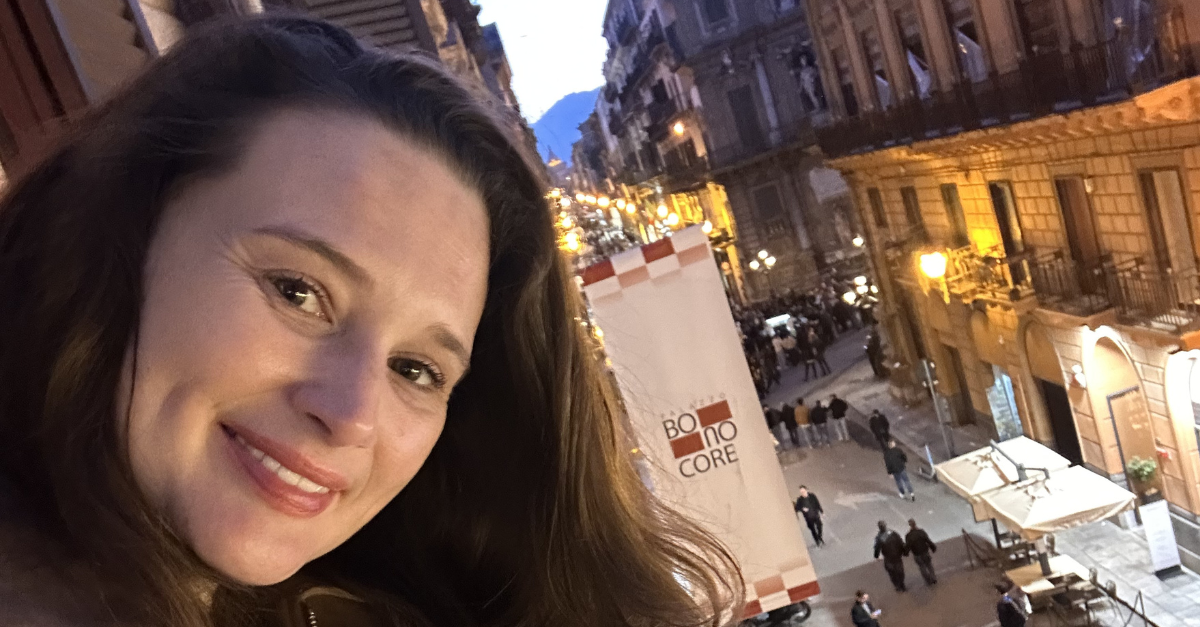
Based in Ireland, Nicola Gwillym describes herself as a “part-time nomad”, having a home base, but spending several months of the year working from different locations across Europe, from Spain and Albania, to Palermo, Edinburgh and nomad communities in between.
Nicola’s approach to remote work is not about being constantly on the move. It is more considered than that. It is about building a rhythm that gives her space to work, travel, connect with local communities and maintain strong career development.
A career shaped by reinvention
“My journey hasn't been linear to becoming a digital nomad, or a remote worker. I used to actually run my own business, a dance school.”
That's right! Before working in social media, AI workflows, and remote-first content systems, Nicola ran a dance school in Ireland for more than a decade. When in-person classes and events were disrupted in 2020, she decided to retrain in digital marketing, completing a master’s degree and working in a website agency across different areas of digital marketing.
Social media quickly became the area that interested Nicola most. It brought together different parts of how she likes to work: structure, ideas, creativity and performance.
“It kind of bridged the science with the creativity, which was quite fun.”
Today, Nicola helps social media managers, creators and marketing teams simplify the way they create content, particularly through practical AI workflows. Her work includes consulting, speaking, workshops, LinkedIn strategy and content management, with a focus on making social media more manageable and sustainable.
She has delivered AI training for organisations including HP Switzerland, spoken at nomad and social media conferences, and continues to build her own platform through a newsletter, Remotely Social.
Finding the right environment to work well
Nicola is careful not to frame remote work as a rejection of offices altogether, enjoying in-person collaboration, events and creative work. What Nicola found difficult was being in the same office environment every day.
“I love in-person collaboration, events, coming together, creative work, that type of thing. But being in office every single day feels quite stifling to me creatively.”
She describes herself as someone who likes working from home, but feels most energised when work offers the ability to travel and experience different places.
For Nicola, the value of remote work is closely tied to choice.
That sense of autonomy has shaped how she thinks about work, travel and creativity. A change in setting offers new inputs, new conversations and a different rhythm to the days.
How travel supports creativity
Nicola’s work sits across social media, content, AI, client management, and building a personal brand. It is creative work, but also highly structured. She needs to manage client accounts, develop ideas, keep projects moving, and stay consistent across platforms. Travel helps support that process.
“I don't actually feel like I need time off from my job because I really like to grow my career and grow my new company”
She gives the example of spending time in a Spanish village with around 400 locals, where she could speak Spanish, interact with people every day and experience a very different pace of life.
“I can travel to Spain, I can enjoy a new experience being in a village with locals. I speak Spanish, so I get to interact locally every day. But that sparks creativity in my thinking, and work.”
For anyone who works while travelling, that idea will feel familiar. The environment around you can change what you notice, how you think, and how you approach the work in front of you.
Becoming part of the place
One of the strongest themes in Nicola’s approach to travel is community and not simply arriving somewhere, opening a laptop and staying separate from the local culture. Looking for ways to connect with local people, understand the area and contribute, is at the heart of her travels.
In Palermo, Nicola made local friends and went to dance classes twice a week. In Spain, time was spent in villages where nomads and local communities are being brought together, a factor that is encouraged by local governments as a way to bring people back to rural towns and villages.
When possible, Nicola offers workshops, shares skills around LinkedIn or AI, joins local activities, or even offers English exchange or dance classes.
“It's like becoming a part of the culture and talking to the locals is really important to me.”
For Nicola, the best version of remote work includes some kind of exchange with the place itself. It is to travel with a stronger sense of belonging.
“I don't just go somewhere and start using all the facilities and not give back to the community.”
What makes a good workspace on the road
Over time, Nicola has tested a few different ways of living and working while travelling, including long-term Airbnbs and co-living spaces.
At this stage, there’s a draw to co-living environments because they often combine accommodation, reliable Wi-Fi, community and access to a coworking space.
“I've tried different things. I've tried long term Airbnbs and I've tried co-living. And to be honest, I really enjoy the co-living environment.”
For Nicola, a good remote-work setup has a few important ingredients: a private space to recharge, a reliable internet connection, a proper place to work, and ideally a mix of locals and other remote workers to meet.
She also likes having different spaces for different types of work: a coworking area for focus, meeting rooms for calls, and a home environment for downtime.
When it comes to the personal desk setup, it’s all about keeping things simple.
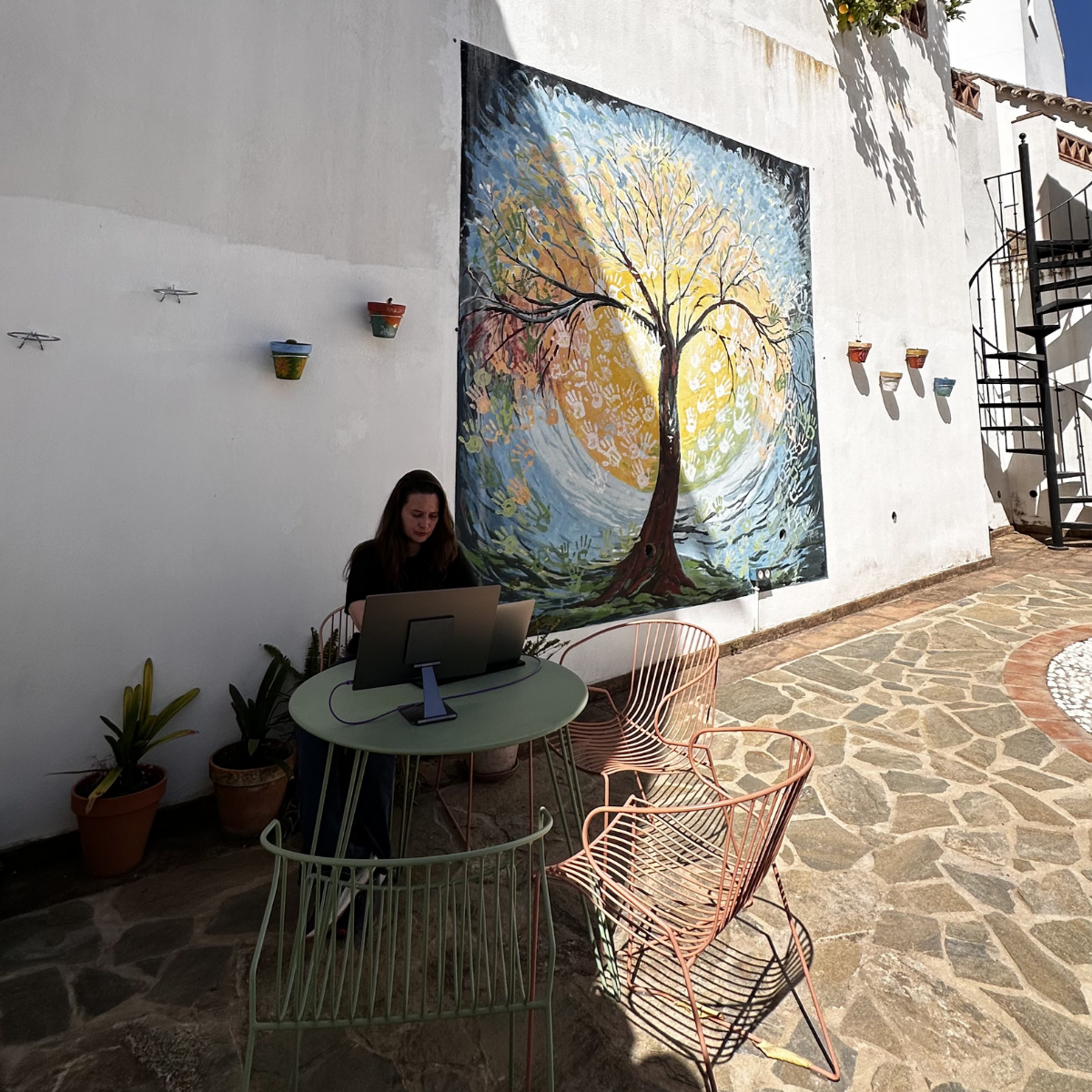
“So it's the laptop, the espresso Display. And literally that's it at the moment. Just two pieces, plug in and go.”
Nicola’s travel tech stack
Nicola’s work requires regular movement between video, content calendars, social platforms, client documents, AI tools and research. As a social media professional, multiple tabs, tools and conversations can be open at the same time.
The essential hardware setup is intentionally light: laptop, phone and an espresso Display.
“The second display is really important for what I do. I do a lot of video work and just having a million tabs open as a social media person, it's just great to have the two screens.”
The extra screen space helps make work more comfortable without adding too much complexity to the travel setup. It gives her room to manage client work, edit content, reference notes and keep key tools visible, while still being able to pack up and move easily.
On the software side, Nicola uses Notion to organise client projects and work, then adapts to whichever project management tools that clients use, including ClickUp and Asana. For content creation, it’s CapCut, Canva, social media apps and AI tools including Claude.
“I love Claude, big Claude user.”
The overall approach is practical: keep the setup light, make sure the tools genuinely support the work, and avoid carrying more than needed.
.png)
Who is a digital nomad in 2026?
Nicola has spent time in a range of nomad communities and conferences, and says the people you meet are much more varied than some might expect.
“I don't think it's like, oh, you have to be travelling full time or you have to be like a certain age group.”
Some people work remote 9-to-5 jobs. Some freelance. Some run companies. Others are building new projects and using a change of location to find focus, nature, or community.
“There's quite a lot of different people and different perspectives, cultures.”
For those who are curious about remote work but not ready to travel full-time, Nicola’s version may feel more achievable. A home base country (Ireland in this case), travel for meaningful periods of the year, and locations that support both work and personal life.
Starting small
For anyone interested in trying a more travel-based work life, Nicola’s advice is practical. The first step is making sure the work can support the lifestyle.
“For me, it was about finding the right remote work so I could support the lifestyle.”
From there, the suggestion is all about thinking clearly about budget, whether you will keep a home base, what your day-to-day costs will look like, and how your work routine will function in a different place.
The first major test was six weeks in Saranda, in the south of Albania. Nicola deliberately chose somewhere that was not one of Europe’s major nomad hubs, seeking to build a better understanding of what it would be like to work without an established remote-work community around her.
“I wanted to explore somewhere myself. What's it really like working when there isn't a nomad community? When there isn't a co-work? Because there wasn't a co-work, how am I going to cope?”
There were challenges. Navigating local connectivity, SIM cards, time zones and how to manage calendars across countries. But the experience can also build confidence.
For people wanting to test the idea closer to home, Nicola recommends taking the same routine into a different environment before making a bigger leap.
“Take your routine, bring it with you, maybe test it out in the local coffee shops at your own place, you know, where you live.”
Lessons for business travellers
Nicola’s lifestyle is more travel-focused than most, but there are clear lessons for anyone who works between places.
A good remote setup does not need to be complicated. A reliable laptop, a second screen, strong connectivity and the right software can be enough to create a productive workspace almost anywhere.
The bigger lesson is around intention. Choose locations carefully, consider the communities (local and nomad), keep work systems simple, and use tools to support the way you actually work.
For business travellers, hybrid workers and remote professionals, Nicola’s experience shows how much easier it becomes to work away from a fixed desk when the essentials are already in place.
What comes next
Looking ahead, Nicola wants to continue building experience and expertise in the creator space, collaborate with clients and spend more time travelling through Europe.
The next step is Edinburgh, where time will be spent working on content around a Cold War nuclear bunker during the famous Fringe Festival. Palermo is also high on the list of places to return to.
“I really love travelling around Europe. So more European locations. I'm definitely going back to Palermo. A great community.”
For Nicola, remote work has opened up a way to build a career while staying connected to the places, communities and experiences that can energise and inspire creativity.
And for anyone considering their own version of working from somewhere else, the advice is simple enough to start with: test your routine, keep your setup simple, and give it a go. Try it out locally and move on from there.
.png)
.ai.png)
.jpg)
.png)


